Pennsylvania car-buying guide
Pennsylvania EV Road User Charge Explained
See Pennsylvania’s 2026 Road User Charge: $250/$500 for battery EVs and $63/$126 for plug-in hybrids, plus exemptions, payment rules and registration details.
Published and verified October 4, 2026 By
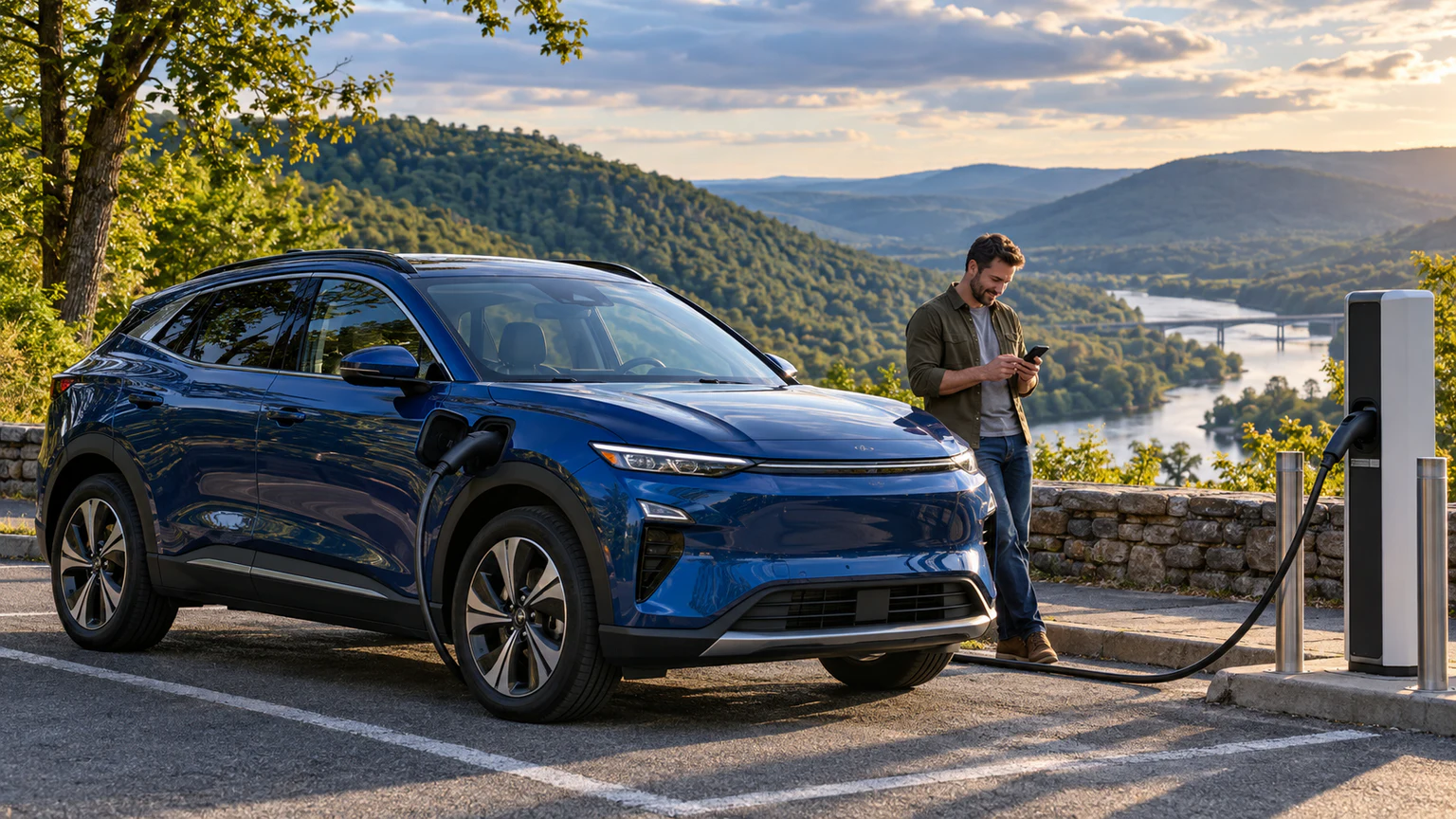
The Pennsylvania Road User Charge is a separate charge that generally applies to most registered battery-electric vehicles and plug-in hybrid electric vehicles with a gross vehicle weight rating of 14,000 pounds or less. For 2026, a battery EV owes $250 for one year or $500 for two years; a PHEV owes $63 for one year or $126 for two years. The charge is separate from the ordinary passenger registration fee, and statutory exemptions can apply.
2026 Pennsylvania EV and PHEV amounts
| Fuel type | One year | Two years |
|---|---|---|
| Battery-electric vehicle | $250 | $500 |
| Plug-in hybrid electric vehicle | $63 | $126 |
| Gas or diesel vehicle | Not subject to the RUC | Not subject to the RUC for either term |
| Conventional hybrid | Not subject to the RUC | Not subject to the RUC for either term |
The Pennsylvania PHEV fee is lower than the battery-EV amount. A conventional hybrid that cannot be plugged in is not treated as a PHEV by the supported engine.
Who pays and who is exempt?
Most owners or registrants of covered Pennsylvania EVs and PHEVs must enroll in a Road User Charge payment option. PennDOT identifies golf carts, electric motorcycles, model-year 1990-or-older vehicles, certain government vehicles, and vehicles over 14,000 pounds GVWR as exempt.
Section 9024 also identifies neighborhood electric vehicles, vehicles not required to be registered, vehicles registered to a person exempt under section 9004(e), and qualified motor vehicles under section 2101.1. Confirm an unusual vehicle or registrant category with PennDOT.
The Road User Charge is separate from registration
PennDOT lists the Road User Charge as an additional amount for covered electric and plug-in hybrid vehicles. It does not replace the ordinary passenger registration fee, county Fee for Local Use when applicable, or other transaction-specific charges.
The registration calculator shows each supported amount on its own line. This makes it easier to distinguish a $250 EV charge from the $48 one-year passenger registration fee instead of treating the combined amount as one unexplained registration price.
The charge follows the registration term
PennDOT offers a flat payment for the registration period and eligible payment-plan options. For renewal, the owner must enroll and make the first RUC payment before renewing the vehicle registration. The Road User Charge term must match the registration term: a one-year registration uses the one-year RUC, and a two-year registration uses the two-year amount.
That same term matching applies to the supported Pennsylvania Fee for Local Use. A participating county adds $5 for one year or $10 for two years.
Worked example: two-year battery EV registration
The verified engine returns $596.00: $96.00 for two-year ordinary passenger registration plus the $500.00 EV charge. Adams County is not in the October 2026 local-use dataset, so this example adds no county fee.
What this charge does not cover
The calculation does not estimate inspection-station charges, agent or messenger service fees, specialty plates, penalties, or vehicle classes outside the supported ordinary private passenger scope. Sales tax and title fees are also separate from this registration-only example.
Use the dedicated calculator below when you only need the RUC. Use the Pennsylvania vehicle registration fee calculator to combine it with supported registration and county charges. The Fee for Local Use guide explains the county-based charge that can appear beside the RUC.
Get your estimate
Pennsylvania Road User Charge Calculator
Select the vehicle type, official fee year, registration period, and exemption status to calculate the Road User Charge by itself.
Official Pennsylvania sources
Rules and amounts in this guide were checked against these primary government sources.
- MV-70S — Bureau of Motor Vehicles Schedule of FeesPennsylvania Department of Transportation · verified October 2026
- Road User Charge for Electric and Plug-In Hybrid VehiclesPennsylvania Department of Transportation · verified October 2026
- Road User Charge (RUC) Frequently Asked QuestionsPennsylvania Department of Transportation · verified October 2026
- 75 Pa.C.S. § 9024 — Electric Vehicle Road User ChargePennsylvania General Assembly · verified October 2026
- Bulletin 26-13 — RUC Enrollment and Payment PlanPennsylvania Department of Transportation · verified November 2026